QDC 2026
O'Donnell v William Roberts Lawyers [2026] QDC 9
Case involving professional liability of a law firm.
View Post
17
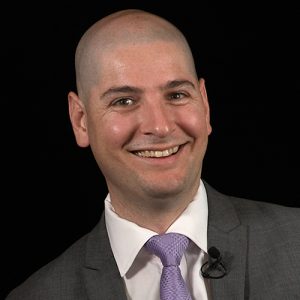
NSW Criminal Defence Lawyer. Solicitor Advocate. Director at JSA NSW — The Criminal Law Specialists. Creator of TrialDirections.com.au. Known as “That CaseNote Guy.”

Andrew Tiedt is one of New South Wales' most recognised criminal defence lawyers. As Director & Principal of JSA NSW — The Criminal Law Specialists, he brings nearly two decades of courtroom experience spanning every level of the Australian court system, from the Local Court to the High Court of Australia.
Admitted to the profession in 2007, Andrew has spent his entire career working exclusively in criminal law. He has acted for thousands of clients accused of criminal offences — from murder, sexual offences, and fraud to drug supply, serious driving offences, and internet-based crimes.
One of the few NSW solicitors who appears in jury trials without briefing counsel, Andrew is a true solicitor advocate — preparing, running, and arguing his own trials. He has established a reputation as a “fierce and skilled advocate” and his case commentaries on LinkedIn have earned him the moniker “That CaseNote Guy”.
Beyond criminal defence, Andrew handles claims against police for false imprisonment, unlawful arrest, assault, and malicious prosecution. He has appeared before ICAC, the AAT, NCAT, and the Australian Criminal Intelligence Commission.
He created TrialDirections.com.au, a free 61-chapter resource on criminal trial directions used by lawyers across Australia. He has written opinion pieces for The Guardian Australia, been featured in the Law Society Journal, and appeared on BenchTV, Lawyers Weekly, and multiple legal podcasts.
High Court of Australia · NSW Supreme Court · NSW District Court · NSW Local Court · Children's Court · ICAC · Administrative Appeals Tribunal (AAT) · NSW Civil and Administrative Tribunal (NCAT) · NSW Criminal Intelligence Commission · Australian Criminal Intelligence Commission
62 case notes spanning the High Court of Australia to the Local Court, covering criminal appeals, sentencing, evidence law, and procedure.
Case involving professional liability of a law firm.
Victorian Court of Appeal decision on criminal law matters.
Court of Criminal Appeal decision with detailed case note analysis.
Tasmanian Court of Criminal Appeal decision with case note analysis.
Court of Criminal Appeal decision with detailed case note analysis.
Court of Criminal Appeal decision with detailed case note analysis.
Court of Criminal Appeal decision with detailed case note analysis.
Court of Criminal Appeal decision analysed by Andrew.
High Court of Australia decision on criminal law matters.
Court of Criminal Appeal decision. Andrew posted a detailed case note with document analysis.
Multiple co-accused appeals from the same trial. The CCA ordered new trials after finding the cases were 'relevantly identical' to an earlier successful appeal by a co-accused.
Key takeaway: When a co-accused's appeal succeeds, other co-accused raising the same point should follow.
Court of Criminal Appeal decision with detailed case note analysis.
Bruce Lehrmann defamation appeal against Network Ten. One of the most high-profile Australian cases of the decade.
Victorian Court of Appeal criminal decision with case note analysis.
Court of Criminal Appeal decision with detailed case note analysis.
Court of Criminal Appeal decision with detailed case note analysis.
Legal costs or professional conduct dispute involving a law firm in the District Court.
Supreme Court decision involving the Sydney Children's Hospitals Network.
District Court criminal matter with case note analysis.
Supreme Court criminal matter.
District Court criminal matter with case note analysis.
District Court criminal matter with case note analysis.
Supreme Court criminal matter with case note analysis — related to R v KL [2025] NSWSC 1414.
Supreme Court criminal matter with case note analysis.
District Court criminal matter with case note analysis.
Supreme Court criminal matter involving a pseudonymised defendant.
Supreme Court criminal matter with case note analysis.
District Court criminal matter with case note analysis.
Court of Criminal Appeal decision with detailed case note analysis.
District Court criminal matter.
Supreme Court criminal matter with case note analysis.
Federal Court decision with case note analysis.
Victorian Supreme Court decision with case note analysis.
Court of Criminal Appeal decision with detailed case note analysis.
Court of Criminal Appeal decision. Andrew posted a detailed case note with document analysis.
Court of Criminal Appeal decision with detailed case note analysis.
High Court of Australia decision on criminal law matters.
Court of Criminal Appeal decision with detailed case note analysis.
High Court of Australia decision on criminal law matters.
Court of Criminal Appeal decision with detailed case note analysis.
Analysis of witness credibility where cross-examination exposed inconsistencies and unreliability in testimony. The witness's statement contained conclusions beyond his knowledge.
Key takeaway: Cross-examination remains the most effective tool for testing witness credibility.
The Court of Appeal set aside Julie Bugmy's conviction for resisting arrest, finding her arrest was unlawful. Police must consider mandatory factors under s77(3) of the Bail Act 2013 before arresting for bail breaches.
Key takeaway: Section 77(3) considerations are mandatory, not advisory. Failure to consider them renders an arrest unlawful.
Justice Mossop identified a character reference that appeared to be written with ChatGPT. The judge ruled that using AI-generated references in sentencing is 'clearly inappropriate.'
Key takeaway: Courts will scrutinise AI-generated character references — authenticity matters in sentencing.
Whether police lawfully arrested a 78-year-old man for allegedly breaching an ADVO when he attended a shopping centre but not the specific store named in the order.
Key takeaway: ADVO conditions must be clear and unambiguous; arrest must be reasonably necessary.
The CCA quashed an indictment for historical indecent assault, finding that 1978 legislation did not contemplate female perpetrators of sexual offences against boys.
Key takeaway: Historical legislation must be interpreted as it existed at the time of the alleged offence.
Fitness instructor charged with 47 counts of sexual offences against 18 complainants (2013-2020). The case examined whether the trial should proceed by judge alone due to volume and complexity.
Key takeaway: Judge-alone trials may be appropriate where the volume of charges risks jury confusion.
The CCA held that the defence of Honest and Reasonable Mistake of Fact is NOT available for the offence of Drive with Illicit Drug in System. The offence is absolute liability, not strict liability.
Key takeaway: Drug driving is absolute liability — no defence of honest and reasonable mistake.
Murder case where expert evidence was unanimous, requiring the court to direct a jury verdict of 'act proven but not criminally responsible' based on mental health impairment.
Key takeaway: When expert evidence is unanimous on mental health, the court must direct the appropriate verdict.
Trial judge rebuked the DPP for proceeding with a sexual assault prosecution lacking sufficient evidence. Complainant was heavily intoxicated (BAC 0.15-0.2) with no memory of events. Defendant acquitted after brief jury deliberation and awarded costs certificate.
Key takeaway: Prosecutors must have reasonable prospects of conviction before proceeding to trial.
Justice Walton clarified the 'high degree of confidence' test under s22C of the Bail Act 2013 for youth bail. The phrase is undefined and represents a test 'unknown to the criminal law.'
Key takeaway: 'High degree of confidence' does not require certainty — it is an evaluation of future conduct.
Whether a trial judge should have recused herself when a witness provided unexpected evidence that departed from prior police statements.
Key takeaway: Judicial recusal may be warranted when unexpected evidence creates an appearance of bias.
The 'Totaan error' in sentencing — judges had been wrongly refusing to consider the impact of sentences on an offender's family and dependents unless 'exceptional hardship' could be demonstrated.
Key takeaway: Sentencing courts must consider family hardship without requiring an 'exceptional' threshold.
The High Court clarified that co-accused in joint trials qualify as 'parties' under evidence law, affecting how evidence can be excluded under s135 of the Evidence Act.
Key takeaway: Co-accused are 'parties' for the purpose of evidence exclusion — a significant clarification for joint trials.
Bail test for appeals after conviction and sentence in the Local Court. Established that the 'special or exceptional circumstances' test under s22B of the Bail Act applies to persons appealing to the District Court after local court conviction, particularly when full-time imprisonment was imposed.
Key takeaway: The s22B 'special or exceptional circumstances' test applies to bail pending appeal from Local Court.
Whether circumstances warranted discharge of the entire jury after a juror accidentally received the trial judge's ruling on expert evidence admissibility. Inconsistent responses about what jurors had seen and read.
Key takeaway: Jury irregularities from inadvertent disclosure of judicial rulings may require full jury discharge.
Self-defence case involving wounding charges. The CCA found the trial judge misdirected the jury by using 'more likely than not' for tendency evidence (risking reversing the onus of proof) and by applying 'beyond reasonable doubt' to inferences favourable to the accused.
Key takeaway: Jury directions on tendency evidence must not reverse the onus of proof. New trial ordered.
Plutus Payroll trial — examined financial burdens on jurors in long trials. NSW jurors receive $106.30/day (or $247.40 after day 10). Employers only required to make up-pay for first 10 days. Court noted this makes juries less representative in longer trials.
Key takeaway: Jury compensation in long trials creates representativeness concerns — a systemic access to justice issue.
Whether the same magistrate should hear multiple applications from the same defendant, including a mental health diversion under s14 of the Mental Health and Cognitive Impairment Forensic Provisions Act 2020.
Key takeaway: Mental health diversion applications raise procedural questions about judicial allocation.
Bill Spedding was awarded $1.4M in damages for malicious prosecution. Charged with historical child sex offences as part of the William Tyrell investigation, the court found no reasonable or probable cause for the charges.
Key takeaway: Police must have reasonable and probable cause before laying charges — $1.4M awarded for malicious prosecution.
High Court decision on prosecution disclosure obligations regarding Cellebrite phone downloads. Mere notification of a download's existence is insufficient — the prosecution must provide a readily searchable copy.
Key takeaway: Prosecution must serve Cellebrite downloads, not merely notify of their existence.
Defendant won a new trial after an unbalanced judicial summing up. The High Court examined whether the trial judge's summing up was so unbalanced as to deprive the accused of a fair trial.
Key takeaway: An unbalanced judicial summing up can deprive the accused of a fair trial — new trial ordered by HCA.
Historic Victorian Supreme Court case revisited by Andrew in his case commentary series.
Featured on podcasts, webinars, YouTube, and in legal publications.
Law Society of New South Wales (LawInform)
Hosted a webinar for the Law Society of NSW analysing 20 noteworthy criminal cases from 2024. Covered appeals, sentencing principles, jury directions, and procedural issues. On-demand recording available on lawinform.com.au.
The Lawyers Weekly Show
Hosted by Jerome Doraisamy
Discussed why criminal law is stimulating, whether advocacy is the remit of barristers only, why he describes himself as a 'solicitor advocate', running his own jury trials, and developing trial advocacy skills.
Just Chat (Law Society of NSW)
Hosted by Francisco Silva
51 minutes
Discussed his journey into the legal profession, thoughts on the jury system, and the moral complexities faced by criminal lawyers.
Sidebar by Hearsay the Legal Podcast
23 minutes
Discussed the background to doli incapax, major offending by children, and whether there is a right or wrong answer to the minimum age of criminal responsibility in Australia.
YouTube
Explored legal defences, ethical boundaries in criminal practice, and the emotional toll on lawyers and clients.
BenchTV
Educational video on how analogue drugs are treated under NSW drug legislation, covering the legal framework for prosecuting offences involving substances structurally similar to prohibited drugs.
Law Society Journal (LSJ)
Feature article based on Andrew's Law Society webinar, analysing 20 key criminal cases including R v Hodson (child sex offence sentencing increased on Crown appeal), Symons v R and McDonald v R (new trials ordered), and Bugmy v DPP (unlawful arrest).
Law Society Journal (LSJ)
Feature article about Andrew's first jury trial at Parramatta District Court — a serious assault case arising from a road rage incident where he argued self-defence. The case that transformed him from instructing barristers to running his own trials.
Law Society Journal (LSJ)
Quoted extensively on the NSW Government's proposed demerit system overhaul. Called it 'a sensible approach to punishment and fines' and argued the system should 'reward people who change their behaviour.' Drew on 15 years of handling driving matters.
A comprehensive, free online resource covering 61 chapters on criminal trial directions. Created by Andrew for the legal profession.
Visit TrialDirections.com.au27 posts on criminal law, justice reform, police accountability, and the intersection of technology and law.
Andrew expressed concern about a convicted child rapist competing at the Paris Olympics, questioning where the line should be drawn.
Commentary on the NSW government's landmark reform to abolish 'good character' as a mitigating factor in sentencing for all criminal offences. The Sentencing Council concluded good character is 'a vague and uncertain concept' and an 'unjustified form of moral and social accounting.' Shared the ABC article on the reform.
Reposted Reuters exclusive image. High-engagement repost demonstrating Andrew's interest in high-profile current affairs.
Shared a Betoota Advocate article with commentary. The satirical piece resonated strongly with Andrew's legal audience.
Pretending to be a lawyer isn't as clever as the TV show Suits makes it out to be. There is good reason for taking this kind of offending seriously. Solicitors have all manner of obligations and regulations that must be followed. Misconduct can be reported and dealt with. The court needs to be able to have confidence that people appearing and purporting to be solicitors are actually accredited to do so.
"It is intolerable in a civilised society that Australia claims to be, that someone presumed innocent should have to wait two-and-a-half years before their guilt is determined."
Andrew discussed the undercover police technique where suspects are lured into fake criminal organisations to elicit confessions, exploring concerns about false confessions while noting the technique's effectiveness when suspects provide information only the real perpetrator would know.
Criticised an article for conflating s14 Local Court mental health diversion applications with 'act proven but not criminally responsible' verdicts — calling the comparison 'a ridiculous comparison' that adds confusion.
The family of Bondi Junction stabbing victim Dawn Singleton is suing Nine Network and SMH for copyright infringement over published photographs. Implications for fair dealing exceptions in news reporting.
Commentary on leaked police watch house footage of a Darwin lawyer.
Matthew Page, 63, pleaded guilty to recording intimate images without consent and producing child abuse material after setting up secret cameras in a Newport Airbnb.
A sexual abuse survivor received a record $8 million settlement from a Melbourne primary school.
Commentary on NSW courts restricting public access to judgments.
The Independent Commission Against Corruption raided the City of Parramatta's staff offices and seized mobile phones of senior staff.
Commentary on the judge in a federal sex trafficking case.
Commentary on a high-profile Sydney case involving allegations of misconduct with intimate video evidence.
Another absolutely outstanding Opening of Law Term Dinner. It's always a pleasure to come together with the profession, the judiciary, and other stakeholders.
Did you know that if you ask ChatGPT nicely, it will create a caricature of you based on what it can discover about you online?
This story goes to an uncomfortable issue — when is it acceptable to use digital or artificial signatures? Discusses Trump's claims that Biden's autopen-signed pardons were void.
An alleged Sydney underworld figure facing conspiracy to murder charges was refused bail and remains in Australia's highest security prison. Conditions include continuous video monitoring, solitary confinement 22 hours daily, one six-minute call per day.
A well-known Sydney dance teacher is under investigation.
James Terence Rebbeck, a Sydney cafe owner, sentenced to three years in jail for soliciting, accessing, transmitting and disseminating child abuse material over encrypted platforms.
Amidst the avalanche of posts about what happened in criminal law this year.
Shortly before court hearing, class action involving 3,000 people — force admitted to unlawfully strip-searching plaintiff Raya Meredith. Police made an 'outrageous' submission asking the judge to infer that searching her breasts and genital area was 'objectively necessary' without any evidence. The largest class action against any police force in Australian history.
This video is everything that is wrong with some elements of NSW police. Our laws give police extraordinary powers. Most police officers use those powers responsibly and legally. Those that can not or will not do so need to be kicked out (and, preferably, criminally prosecuted) as soon as possible.
I find it surprising how rarely victims bring civil claims against those who have committed sexual offences. Civil cases have a lower standard of proof and can proceed even if criminal charges are dismissed. Barriers include the lengthy process, cross-examination requirements, and upfront legal costs.
As a general rule, conducting a citizens arrest is fraught with legal risk. Commentary on the legal framework and practical dangers of citizens arrests.
5 published pieces across The Guardian Australia and the Law Society Journal, covering sentencing reform, ICAC, traffic law, and the practice of criminal defence.
Feature article analysing 20 key criminal cases of 2024, based on Andrew's Law Society webinar. Covered R v Hodson (child sex offence sentencing increased on Crown appeal), Symons v R and McDonald v R (new trials ordered following co-accused precedent), Bugmy v DPP (unlawful arrest), Black directions, and civil claims against defendants' estates.
Quoted extensively on the NSW Government's proposed demerit system overhaul. Called it 'a sensible approach to punishment and fines' and argued the system should 'have regard to a person's history, and reward people who change their behaviour.'
Andrew's first jury trial — a serious assault case arising from a road rage incident at Parramatta District Court, where he argued self-defence. The case that transformed him from instructing barristers to running his own jury trials.
Andrew defends the High Court's decision in the Margaret Cunneen case to limit ICAC's powers, arguing that while journalists loved ICAC for its investigative powers, the ruling was 'good news for the rest of society' in protecting civil liberties.
Andrew argues that mandatory minimum penalties are ineffective and that the one-punch law proposal is 'gravely misguided' and will 'disproportionately affect the disenfranchised.'
For legal enquiries, speaking engagements, or media requests.
02 8080 8055
25K+ connections
The Criminal Law Specialists
61 free chapters

Accredited Specialist in Criminal Law. Doyle's Guide Leading Criminal Lawyer 2016–2025.
“It is intolerable in a civilised society that Australia claims to be, that someone presumed innocent should have to wait two-and-a-half years before their guilt is determined.”
— Andrew Tiedt